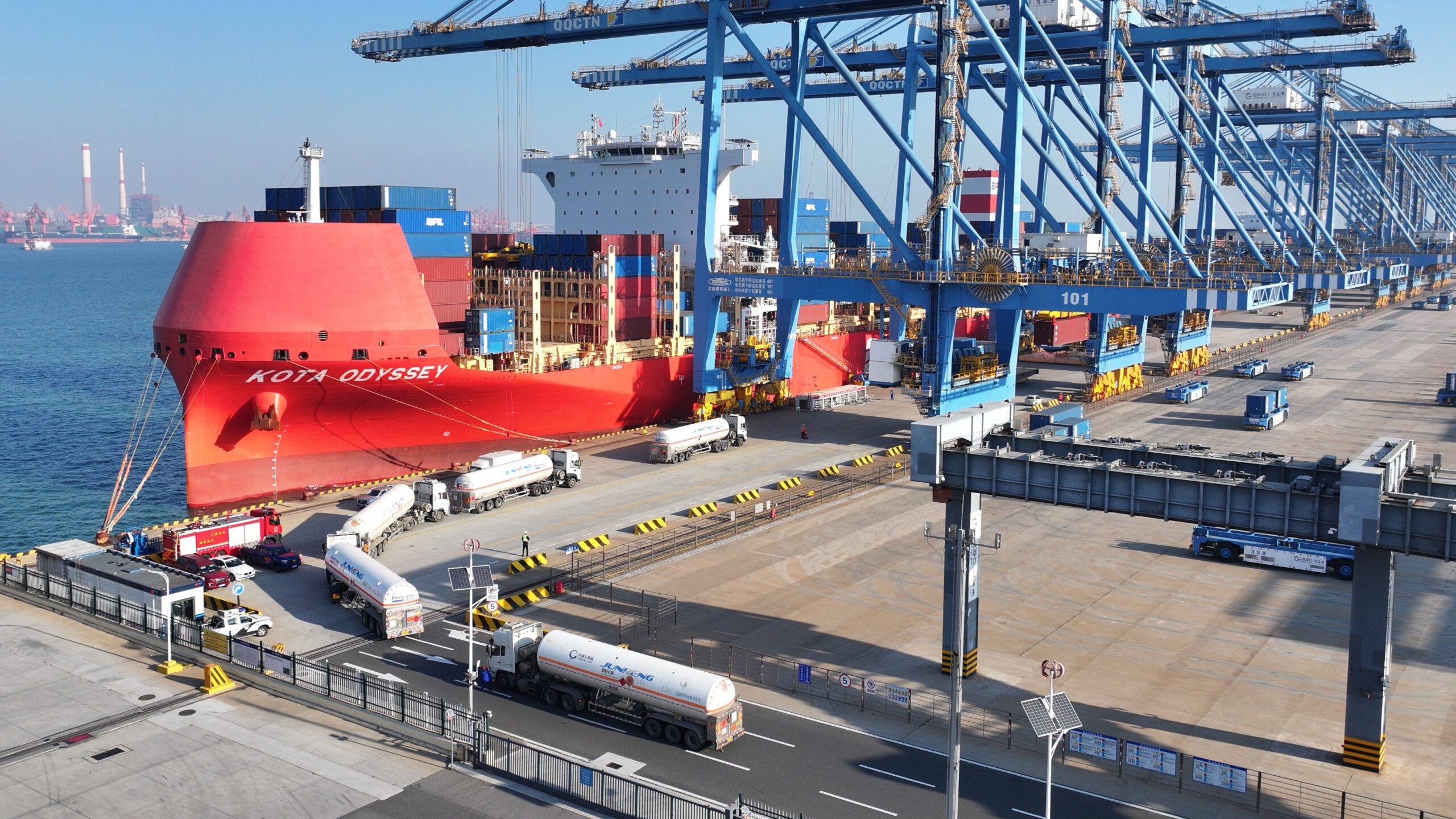
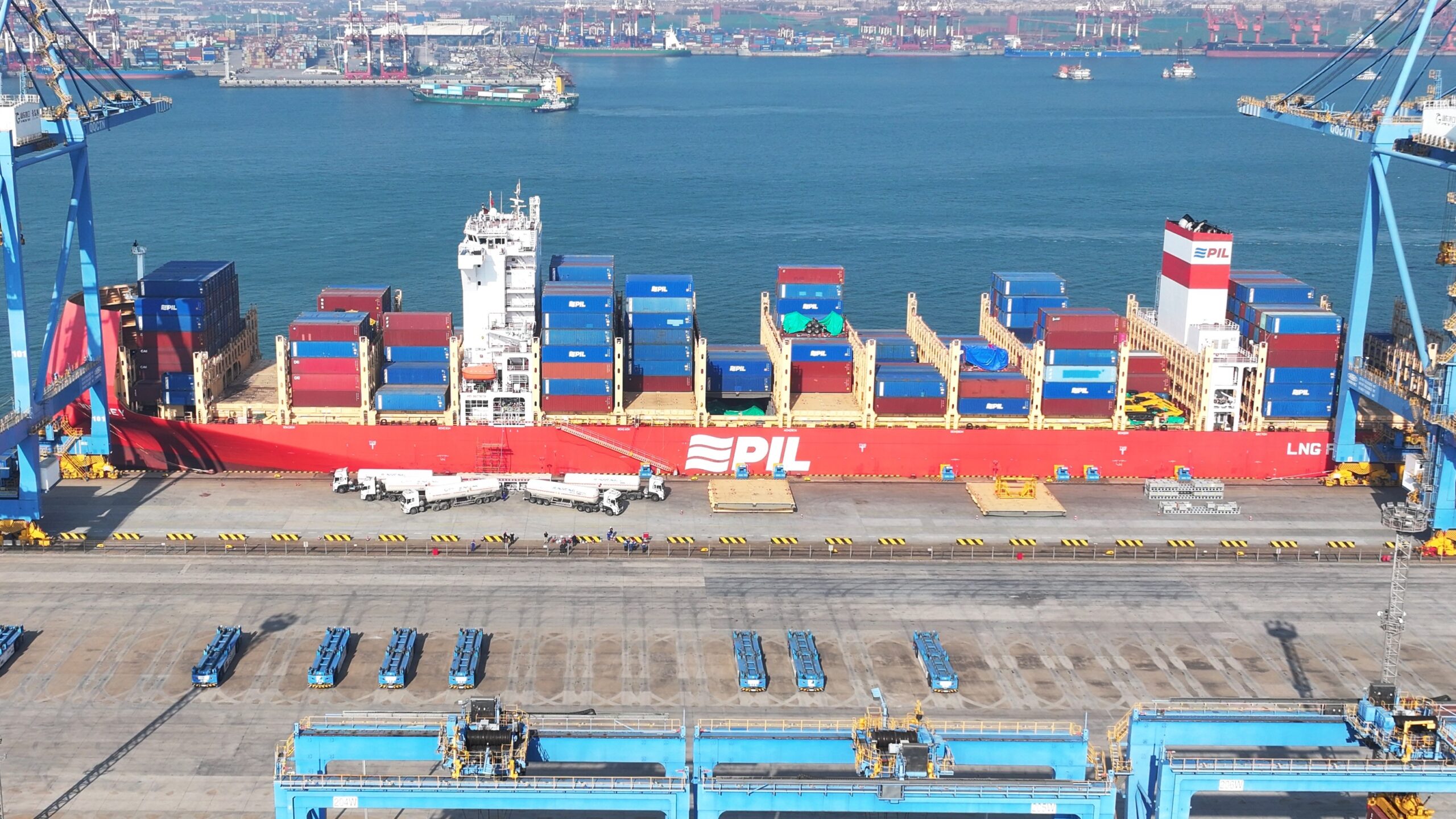
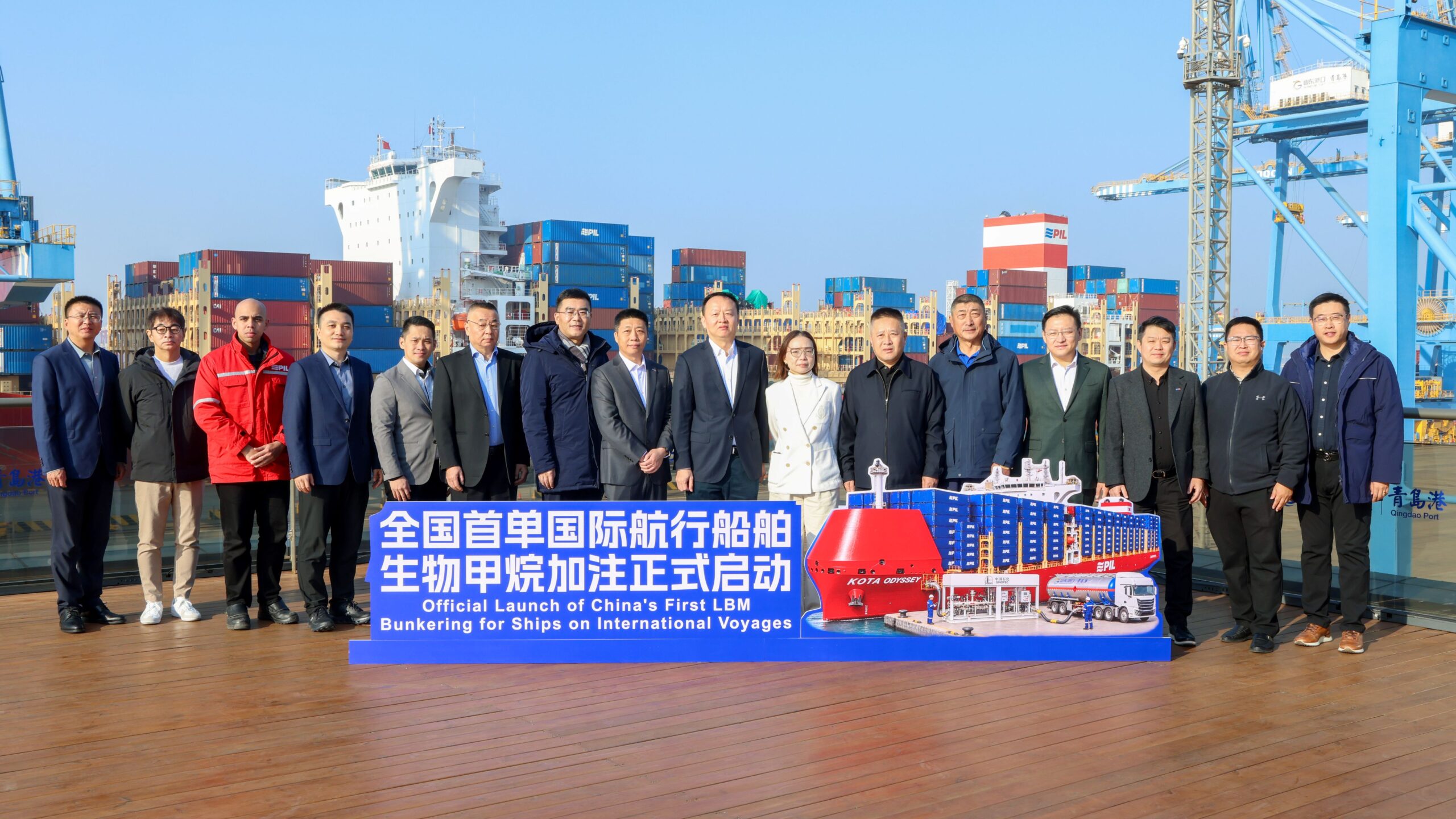
Pacific International Lines (PIL) and Qingdao Port Group have marked a significant milestone in maritime decarbonisation with China’s first LBM bunkering operation for international shipping.
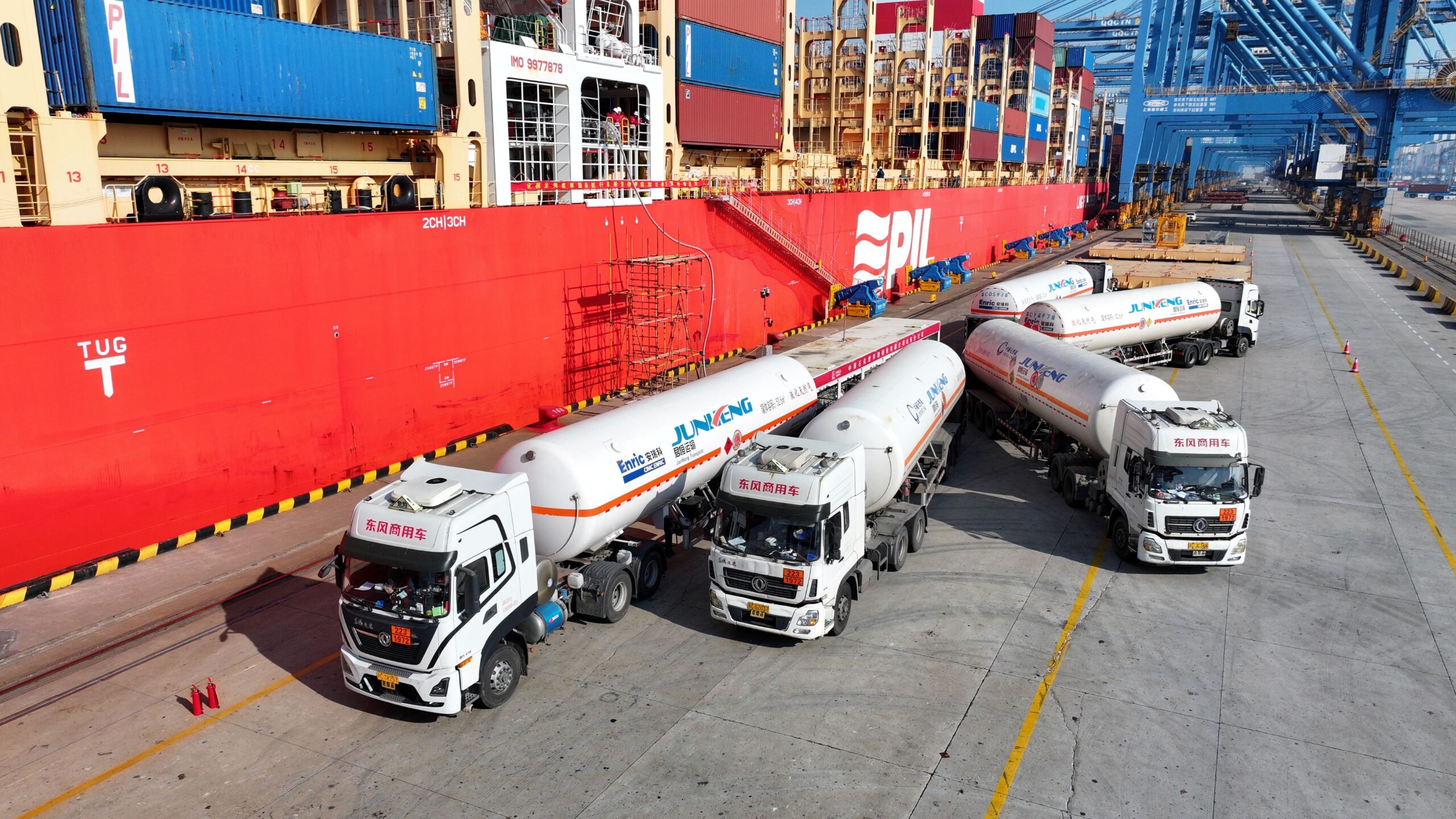
PIL’s LNG dual-fuel container vessel, Kota Odyssey, received ISCC¹-certified LBM through a truck-to-ship operation at Qingdao Port’s QQCTN² terminal. This is the first LBM bunkering to an internationally-trading ship in China and marks Qingdao Port’s capability to offer green LNG molecules to international shipping lines.
This is also PIL’s inaugural use of LBM fuel as the company works with partners across the maritime ecosystem to progress its goal of delivering more sustainable shipping solutions.
LBM is a renewable fuel produced from organic feedstocks which significantly lowers carbon emissions when used in a ship’s engine.
In this first phase, PIL is using it as a drop-in fuel for its LNG dual-fuel vessels without any modification to their machinery systems.
Based on the well-to-wake (lifecycle) methodology, this batch of LBM is projected to cut carbon emissions by more than 70% versus conventional fuel oil. Compared to fossil LNG fuel, this fuel can also achieve GHG emissions reductions of around 70%.
Abhishek Chawla, Chief Marine Officer, PIL said, “We are pleased to achieve this milestone in collaboration with our partners, Qingdao Port Group. This milestone demonstrates the flexibility PIL has built into our fleet renewal programme. With 28 newbuild LNG dual-fuel vessels ordered since 2022, we have the capability to progressively introduce lower-carbon fuels such as LBM into our fuel mix as these become more widely available. PIL’s objective is to provide our customers with a path to greener shipping solutions”
Yijie Zhang, Head of the Energy Business Department, Ark Intelligence, Qingdao Port, said, “This maiden biomethane bunkering service is a major milestone for China’s green shipping transition. It advances Qingdao Port’s development as a regional green bunkering hub. Our partnership with PIL reflects our shared commitment to maritime decarbonisation, and we will keep expanding renewable fuel options for international shipping.”
Delivered to PIL in 2024, Kota Odyssey is an LNG dual-fuel container vessel deployed on PIL’s SWS service connecting Asia with West Africa. The vessel incorporates technologies to improve fuel efficiency and reduce emissions.
The adoption of bio-LNG forms part of PIL’s broader decarbonisation approach combining fleet renewal, the adoption of energy efficiency technology and the progressive adoption of lower emission marine fuels.
¹ISCC – International Sustainability and Carbon Certification
²QQCTN – Qingdao New Qianwan Container Terminal
END
About Pacific International Lines:
Pacific International Lines (PIL) is among the top 12 container shipping lines in the world. Established in Singapore in 1967, PIL is the largest home‑grown carrier in Southeast Asia.
PIL serves customers in over 500 locations, with a focus on Asia, Africa, the Middle East, Latin America, Oceania and the Pacific Islands, by harnessing a dense network of owned agencies and intermodal services, in more than 90 countries worldwide.
Operating a fleet of over 100 container vessels, PIL provides shipping services and solutions across a variety of products, including dry, refrigerated, breakbulk and special cargo to bring sustainable value to our customers with end-to-end transportation solutions.